What Are Cross-Connections and What Is Backflow?
Most people have never heard of backflow—until it becomes a problem. Cross-connections and backflow are critical water safety concerns that affect homes, businesses, and entire public water systems.
Understanding how they work is the first step to protecting your property and staying compliant with local regulations.
What Is a Cross-Connection?
A cross-connection is any point where a potable (clean drinking) water system connects to a non-potable source. This could include irrigation systems, fire lines, industrial equipment, pools, or any system where contamination could occur.
Under normal conditions, these systems remain separated. However, without proper protection, contaminants can enter the drinking water supply.
What Is Backflow?
How Backflow Happens (Simple Visual)
The diagram below shows how clean water can become contaminated when pressure changes and flow reverses direction.
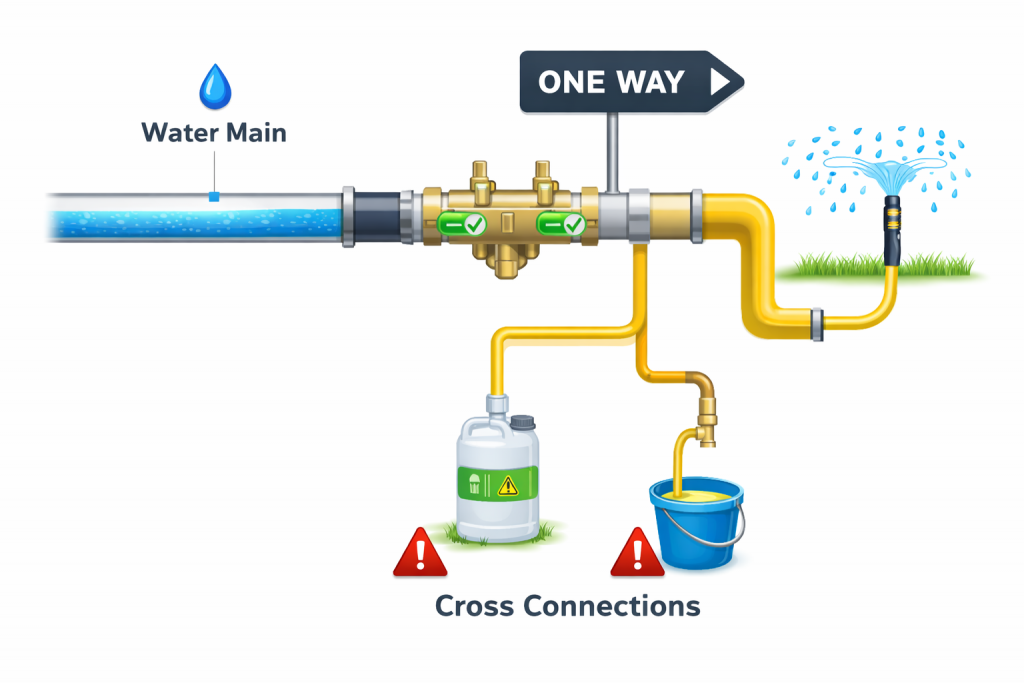
In a normal system, water flows in one direction—from the public supply into your building. When backflow occurs, that direction reverses, allowing contaminants to enter the drinking water system.
Backflow occurs when water flows in the opposite direction than intended, allowing contaminants to enter the clean water system. This can happen due to:
- Backpressure – when downstream pressure exceeds supply pressure
- Backsiphonage – when a drop in supply pressure creates a vacuum effect
Without a properly functioning backflow prevention assembly, this reversal can allow chemicals, bacteria, or debris to enter the public water supply.
Why This Matters
Cross-connections and backflow are not just technical issues—they are public health concerns. Contamination events can affect entire buildings, neighborhoods, or water systems.
Because of this, municipalities and water purveyors require testing, inspections, and proper documentation to ensure systems remain protected.
How Backflow Prevention Works
Backflow prevention assemblies are installed at key points in a system to stop contaminated water from reversing into the potable supply. These devices must be:
- Properly installed
- Regularly tested
- Maintained and repaired when necessary
- Documented for compliance
If a device fails, it must be repaired or replaced before the system can be considered compliant.
Learn More from Regulatory Sources
For additional information from regulatory and training authorities, visit:
- Texas Commission on Environmental Quality (TCEQ) – Cross-Connection Control
- USC Foundation for Cross-Connection Control – Training Resources
Training Video: Working Together for Safe Water
This training video explains how cross-connections and backflow affect public water systems and why prevention is critical.
How A-Plus Backflow Helps
A-Plus Backflow operates a structured compliance system designed to keep your property protected and inspection-ready. We don’t just perform tests—we ensure your devices, documentation, and reporting align with jurisdiction requirements.
Whether you need testing, a customer service inspection, or help understanding your system, we provide clear guidance and reliable execution every step of the way.